
Recycling Alliance
About
What is re-alu?
re-alu is the Recycling Alliance for small aluminium packaging in Europe. It brings together companies across the value chain to improve the collection, sorting, and recycling of small aluminium packaging.
The alliance was created to address a structural gap in current recycling systems in Europe: while aluminium is highly recyclable, small aluminium packaging in many cases is still lost, despite its material value and recyclability.
re-alu acts as a stakeholder platform for coordination, data assessment and development of best practices, supporting stakeholders and public authorities to improve recycling of small aluminium packaging towards the upcoming regulatory requirements, including the EU Packaging and Packaging Waste Regulation (PPWR).
The challenge today
Collection: Inconsistent collection systems and lack of consumer behavior
Across Europe, aluminium packaging is collected through a variety of systems, including commingled collection (all packaging materials collected in the same bin), lightweight packaging streams (normally plastics, metals and liquid cartons), and separate aluminium collection schemes.
In most countries, small aluminium packaging is already intended to be collected with other household packaging. With the entry into force of the PPWR, Member States will be mandated to ensure collection of all recyclable packaging.
However, key challenges remain:
Inconsistent acceptance of small aluminium packaging at municipal level
Lack of harmonized communication to citizens
Low consumer awareness about correct disposal
Sorting: an opportunity for small aluminium packaging
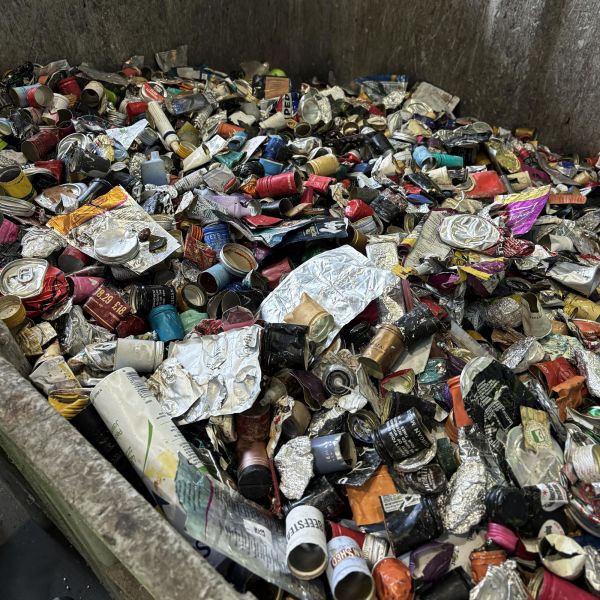
In most European sorting plants, the first step is size separation using sieves (known also as trommels). Items typically smaller than ~5 cm are separated into fine fractions. This step is designed to prioritize larger, high-value packaging (e.g. aluminium cans, PET bottles).
In countries such as Belgium, France, Germany and others, dedicated technologies already exist to recover these items. In many other countries, the fine fraction is incinerated and the aluminium recovered from bottom ashes, which generally shows lower material yields and quality outputs.
Today’s high aluminium recycling rates in Europe are largely driven by beverage cans. With the rapid rollout of Deposit Return Systems (DRS) across Europe, cans will increasingly be removed from household packaging streams, this creates an economic gap for sorting centers and Producer Responsibility Organizations (PROs) which creates the opportunity to focus on the recovery of other aluminium streams, including small aluminium packaging. Recovering these materials supports both economic resilience of sorting infrastructure and a step towards the PPWR recycled-at-scale targets.
Recycling pathways for small aluminium packaging
Once sorted, small aluminium packaging can follow several recycling routes:
- Thermal reprocessing (pyrolysis) which is the main recycling route today for these packaging, where organic and other non-aluminium components are treated in the absence of oxygen, the energy is recovered and used for the process and the aluminium is sent to a remelter.
- Mechanical reprocessing works based on separation of aluminium and non-aluminium content through shredding and sieving and it is commonly used for coffee capsules to separate coffee grounds for composting.
- Direct remelting in specific cases, small aluminium items are mixed with other aluminium fractions and sent directly to a remelter.
All routes confirm that small aluminium packaging is recyclable when properly collected and sorted.
Objectives and roadmap
Primary objective
Increase the recycling rate of small aluminium packaging in Europe to at least 55% by 2035.
Secondary objectives
- Recyclability by design: Ensure that all small aluminium packaging placed on the European market is recyclable.
- Fair EPR treatment: Achieve proportionate and evidence-based EPR fees and eco-modulation for small aluminium packaging.
Roadmap to scale
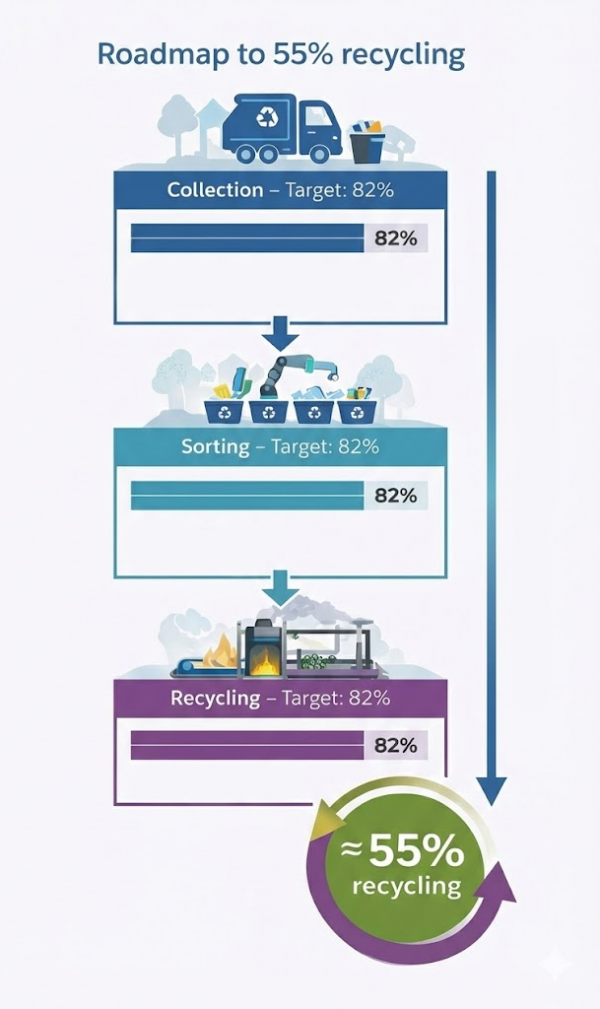
re-alu has defined a Roadmap to 55% recycling aligned with the PPWR “recycled at scale” targets. While the recycling rate may appear modest, achieving it requires strong performance across the entire value chain — from collection to sorting and recycling.
As a simplified illustration, reaching an overall recycling rate of 55% would require each step of the chain to operate at roughly 82% efficiency.
Strategies
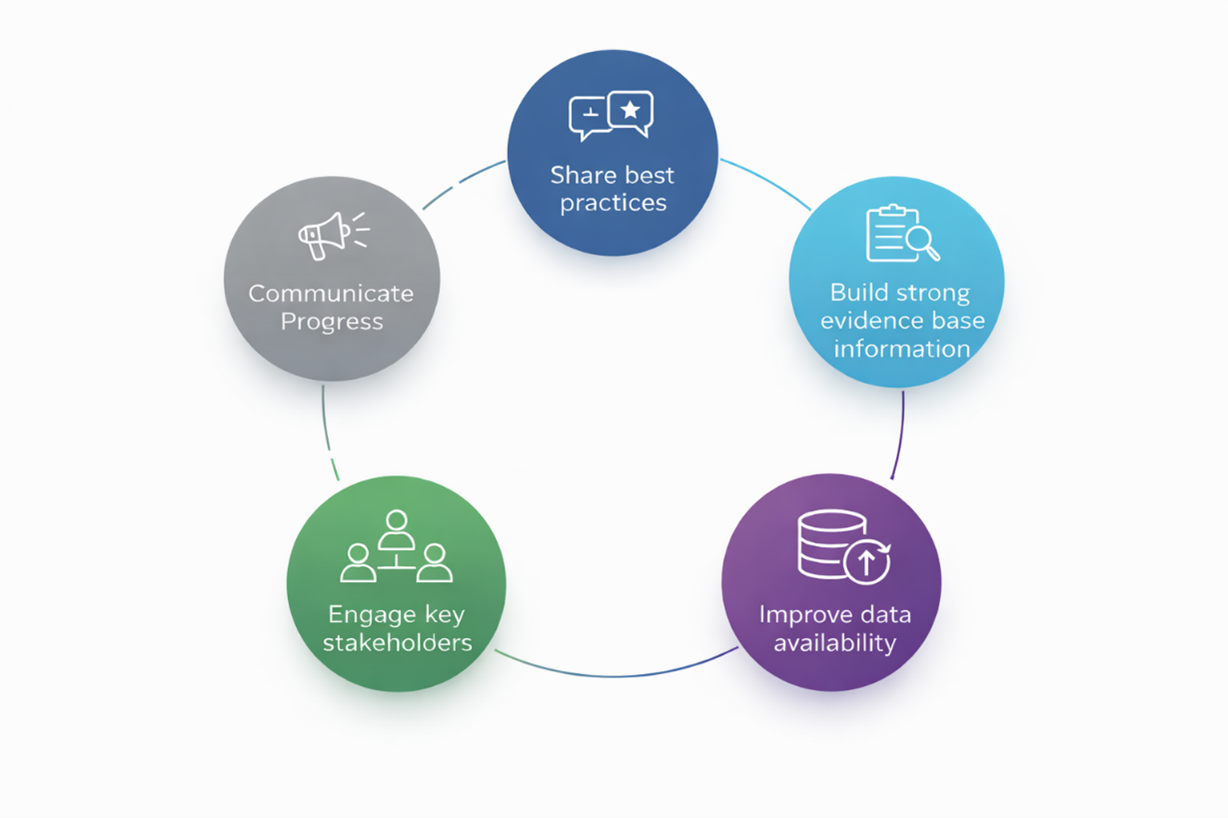
The five strategies outlined below will guide re-alu’s activities.
Scope
Geographical:
EU Member States plus Norway, Switzerland and the UK
Products:
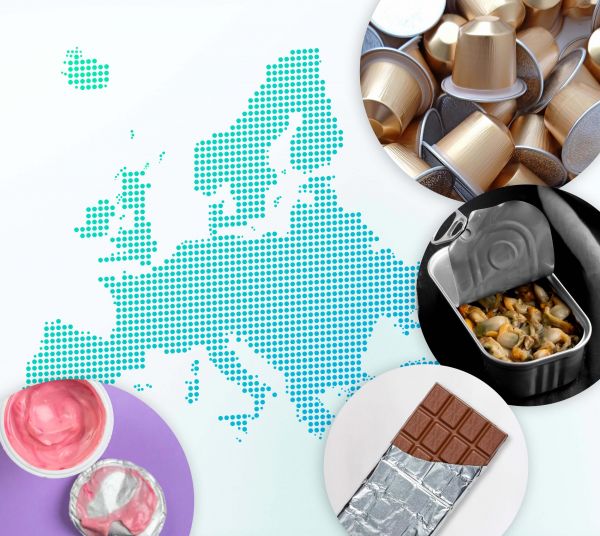
Small packaging predominantly made of aluminium, < 5 cm before sorting, including:
- Coffee capsules
- Confectionery foils
- Wraps and cheese foils
- Dairy and other lids
- Small aluminium foil containers (e.g. pâté)
Estimated retail market volume: 100,000–140,000 tonnes of aluminium per year (in the geographical scope).
Who is involved?
Members and supporters
re-alu brings together stakeholders from across the value chain, including:
- Foil suppliers (EAFA Roller Group)
- Flexible packaging manufacturers (FPE)
- Container and capsule manufacturers (EAFA Container Group)
- Coating and ink suppliers
- Brand owners and fillers
Staff
re-alu brings together a multidisciplinary team of experts aligned around shared objectives, with expertise spanning recycling, public affairs, market intelligence, communications, and events.
You can find more details about the team in the EAFA website.













Founding members (starting 1 January 2026)
Who is involved?
National Associations and local initiatives
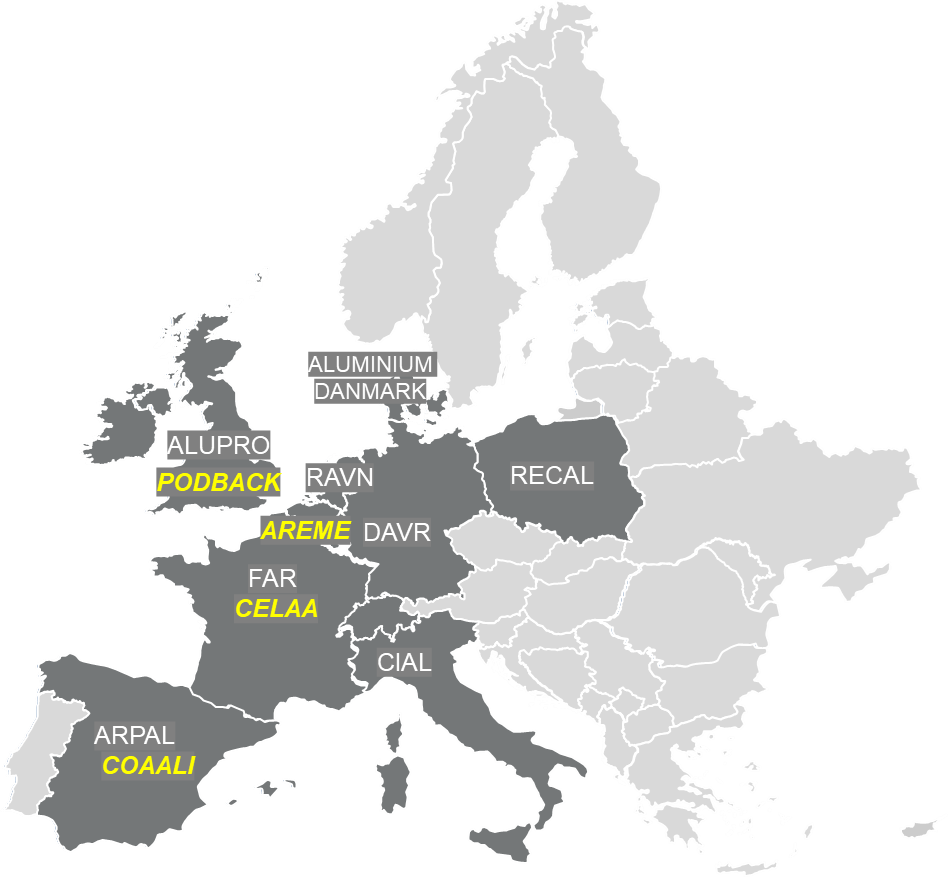
To build knowledge, identify best practices from existing initiatives, and implement local projects, re-alu works through national partnerships ranging from aluminium recycling associations to dedicated initiatives established to improve the collection and recycling of small aluminium packaging at local level.
Contact
Get in touch with us
Please fill out the form to get in touch with us. The fields marked with an asterisk (*) are mandatory fields.